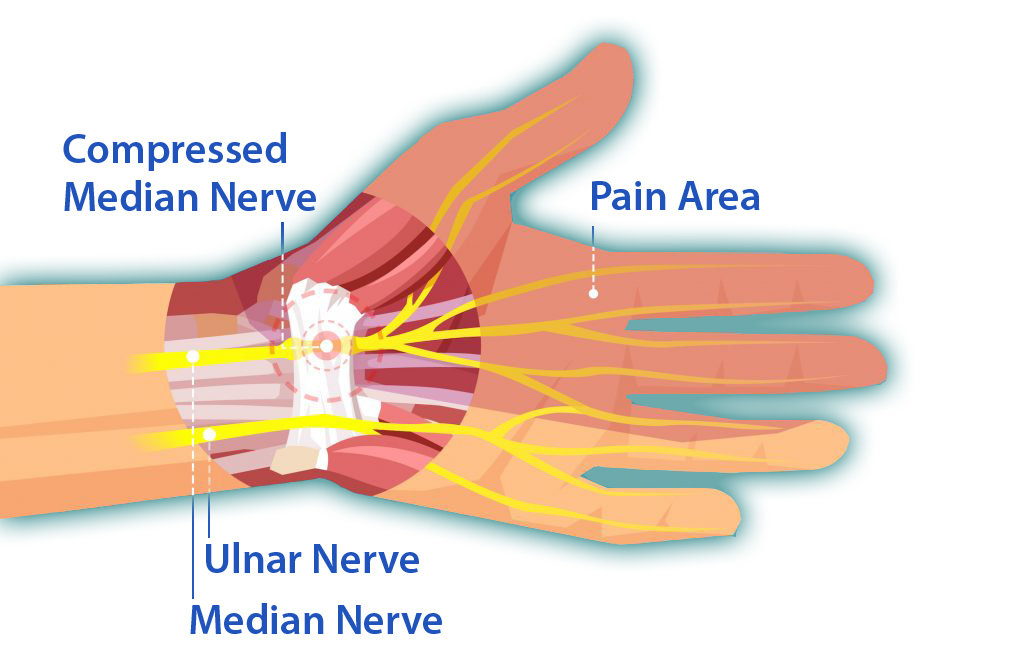
Carpal tunnel syndrome (CTS) is a common hand condition caused by pressure on the median nerve in the wrist, leading to numbness, tingling, and weakness in the thumb and fingers. It is often triggered by repetitive motions, pregnancy, or underlying conditions like arthritis. Treatments include splinting, steroid injections, and surgery, often diagnosed via physical exams and nerve tests. 

Signs and Symptoms of Carpal Tunnel Syndrome
- Numbness or Tingling in Fingers: A pins-and-needles sensation typically affecting the thumb, index, middle, and ring fingers (but not the little finger).
- Pain Radiating Up the Arm: Painful burning or aching often starts in the wrist and radiates up the forearm or down into the hand.
- Nighttime Symptoms: Symptoms often occur during sleep, frequently waking individuals, due to prolonged wrist flexing.
- "Shaking" for Relief: A common behavior to alleviate numbness, tingling, or pain upon waking.
- Weakness in the Hand: A noticeable reduction in grip strength or weakness in the thumb's pinching muscles.
- Dropping Objects: Difficulty holding items, such as a phone, steering wheel, or book, leading to dropped items.
- Fine Motor Skill Difficulty: Challenges performing delicate tasks like buttoning a shirt or writing.
- Sensation of Swelling: A feeling that fingers are swollen or puffy, even when little or no swelling is visible.
Carpal tunnel syndrome (CTS) is caused by increased pressure on the median nerve in the wrist, often stemming from repetitive, high-force, or vibrating hand motions. Key factors include chronic health conditions, pregnancy-related fluid retention, wrist anatomy/injuries, and structural changes like arthritis.
common causes and risk factors for carpal tunnel syndrome:
- Repetitive Motion/Overuse: Prolonged or repetitive flexing of the wrist, such as typing, assembly line work, or using hand tools, can compress the nerve.
- Wrist Injuries: Fractures or dislocations that deform the carpal bones, as well as sprains that cause swelling, can narrow the tunnel.
- Fluid Retention: Pregnancy, menopause, or kidney failure can cause fluid buildup that increases pressure in the carpal tunnel, commonly disappearing after pregnancy.
- Diabetes: Diabetes and other metabolic disorders can decrease the blood supply to nerves, making them more vulnerable to compression.
- Rheumatoid Arthritis: Conditions causing inflammation in the joints and tendons can result in swelling that compresses the median nerve.
- Obesity: Being overweight is a significant risk factor as it can lead to increased inflammation and pressure on the nerves.
- Thyroid Dysfunction: Hypothyroidism (underactive thyroid) can lead to tissue changes and fluid retention.
- Anatomy/Genetics: Some individuals have inherently smaller carpal tunnels, making them more susceptible to compression regardless of work or activity.
PATHOPHYSIOLOGY
Carpal Tunnel Syndrome (CTS) pathophysiology involves increased pressure within the wrist's carpal tunnel, causing compression of the median nerve. This pressure induces ischemia, synovial edema, and venous obstruction, resulting in myelin sheath damage, nerve demyelination, and axonal degeneration. Initial sensory disturbances, such as nocturnal tingling and numbness, are followed by potential muscle wasting (thenar atrophy) and diminished grip strength in chronic stages.

- Increased Tunnel Pressure: The core mechanism is a chronic rise in pressure, commonly above 30 mmHg (compared to normal 2-10 mmHg), caused by increased volume of contents or reduced tunnel capacity.
- Ischemia and Microvascular Change: Increased pressure leads to venous congestion, impaired microcirculation, and decreased blood flow to the nerve, leading to localized ischemia.
- Edema and Fibrosis: Chronic compression results in synovial hypertrophy, edema, and subsequent fibrosis of the tendon sheaths (subsynovial connective tissue) within the tunnel.
- Nerve Degeneration: The damage progresses from reversible demyelination (nerve sheath damage) to irreversible axonal degeneration of the median nerve.
- Repetitive Traction: Repetitive motion, particularly wrist flexion and extension, exacerbates the compression, creating a cycle of injury and inflammation.
PHYSIOTHERAPY
ASSESSMENT AND TREATMENT
Physiotherapy assessment of Carpal Tunnel Syndrome (CTS) focuses on identifying median nerve compression through subjective history (numbness, nocturnal pain) and physical tests. Key assessments include Phalen’s test, Tinel’s sign, and Durkan’s test to reproduce symptoms, alongside checking for muscle weakness in the hand, aiming to establish severity and guide conservative management.
- Subjective History: Key questions include the location of numbness/tingling (thumb, index, middle finger), night pain, and activities that provoke symptoms, such as driving or holding a phone.
- Physical Examination:
- Observation: Looking for atrophy of the thenar eminence (muscle at the base of the thumb).
- Neurovascular Assessment: Assessing sensation to light touch in the median nerve distribution.
- Range of Motion (ROM): Assessing wrist and hand range of motion.
- Strength Testing: Evaluating grip and pinch strength.
- Special Clinical Tests:
- Phalen’s Test: Flexing the wrists together for up to 60 seconds to elicit tingling, which has high sensitivity.
- Tinel’s Sign: Tapping over the median nerve at the wrist crease.
- Carpal Compression Test (Durkan’s): Applying direct pressure over the carpal tunnel for 30 seconds.
Physiotherapy for carpal tunnel syndrome (CTS) focuses on reducing median nerve compression through conservative measures, including splinting, nerve gliding exercises, manual therapy, and ergonomic adjustments. Key treatments include nocturnal splinting for neutral wrist alignment, soft tissue mobilization, and tailored exercises to improve mobility and reduce inflammation, often preventing the need for surgery.
- Splinting/Bracing: Using a wrist splint to maintain a neutral position, especially while sleeping, is the most effective initial management to reduce pressure.
- Nerve Gliding Exercises: Specialized exercises designed to help the median nerve move more freely through the carpal tunnel, alleviating numbness and tingling.
- Manual Therapy: Techniques such as gentle mobilization of the wrist and soft tissues to reduce tension and improve circulation.
- Therapeutic Exercises: Range-of-motion exercises for the wrist and fingers, as well as strengthening exercises for the muscles of the hand, arm, and shoulder.
- Ergonomic Modifications: Expert advice on modifying workstations, such as keyboard and mouse positioning, to minimize repetitive wrist strain.
- Physical Agent Modalities: Use of ultrasound, paraffin, or cold laser therapy to decrease inflammation and manage pain.
- Common Exercises for CTS:
- Wrist Flexion/Extension: Gently bending the wrist forward and backward, holding for 5 seconds.
- Tendon Glides: A series of hand positions—straight hand, hook fist, tabletop, straight fist, and full fist—held for 3-5 seconds each, repeated 3-5 times per day.
- Median Nerve Glide: Specific, complex hand movements, such as holding the hand in a "waiter's tip" position, to stretch the median nerve.
WELCOME TO KISII PHYSIOTHERAPY CLINIC FOR INSTANT TREATMENT